


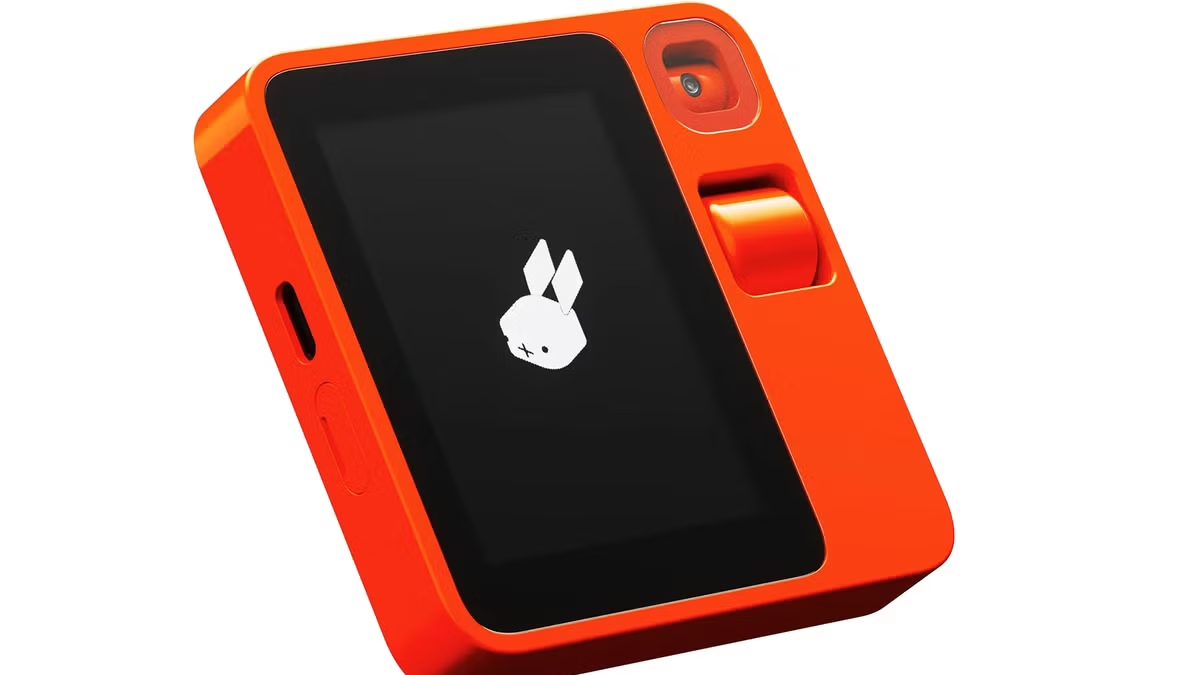
The Rabbit R1 was one of the most exciting gadget announcements of 2024: a $199 standalone AI device, shaped like a bright orange Game Boy, that promised to replace your apps with an AI that understood your intent and acted on your behalf. It shipped in April 2024, gathered initial excitement, and spent the next twelve months illustrating, in vivid detail, everything that happens when a hardware launch outpaces the software that was supposed to justify it.
The core concept — a “Large Action Model” that could operate web services on your behalf the way a human would, without requiring formal API integrations — was genuinely novel. The execution was not. The R1 at launch could do a small number of tasks in a handful of services, slowly and unreliably, with a battery life of about four hours. The “natural language instead of apps” pitch required accepting significantly worse performance than the apps it was replacing.
The updates have improved the device consistently but never transformed it. Core functionality that was supposed to arrive in the weeks after launch — including Uber integration, expanded music service support, and the flagship “teach mode” that would allow users to train the device on their own workflows — appeared months late, in reduced form. The gap between what was demonstrated at CES and what shipped has never fully closed.
What the Rabbit R1 reveals is the fundamental challenge of AI hardware: the value is in the software, and the software depends on AI capabilities that were not ready to support the product vision at launch. The same critique applies, to varying degrees, to the Humane AI Pin, the Frame AI glasses, and most other standalone AI devices launched in 2024.
Verdict: The Rabbit R1 is not a recommended purchase. The $199 device does less than a smartphone app and requires an active Rabbit subscription to function. It is an important product to understand because it illustrates the ceiling of standalone AI hardware in this generation — but understanding it does not require owning it. The lesson it teaches is that “AI assistant” is a software problem, not a hardware opportunity, at least for now.
Leave a Reply