


Card payment processing has operated on a confidence trick for decades: a headline rate that looks reasonable — 1.5 percent, 1.75 percent, 2 percent — followed by a thicket of qualifications. Premium cards cost more. International cards cost more. Refunds attract fees. Monthly minimums apply. Chargeback handling costs extra. By the time a small hospitality or retail business works out what it actually pays, the number is rarely what was on the sign-up page. Flatpay, founded in Copenhagen in 2022, was built on a single premise: charge a flat monthly subscription and take nothing per transaction. The simplicity is deliberate and the reception, particularly in the UK and Nordics, has been significant.
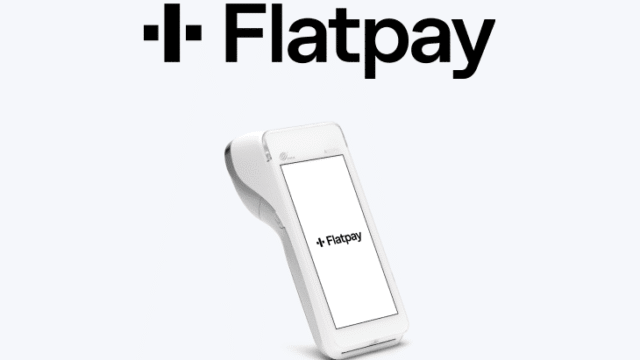
The product is straightforward. Flatpay ships a countertop or handheld card terminal, connects it to your business bank account, and charges a fixed monthly fee regardless of how many payments you process or what value they are. There are no percentage fees on card transactions, no interchange differentials between Visa and Mastercard, no surcharges for contactless or chip-and-pin. The terminal accepts all major card schemes and supports Apple Pay, Google Pay, and contactless out of the box. Setup takes less than a day: the hardware arrives pre-configured, the onboarding app walks through bank connection and business verification, and most merchants are taking payments within 24 hours of the terminal arriving. For business owners who have spent hours on the phone with Worldpay or Square trying to understand a statement, this is a meaningfully different experience.
The economics favour businesses with moderate to high transaction volumes and average transaction values above roughly £20. A café processing £15,000 per month in card payments at a typical 1.75 percent rate pays approximately £262 in processing fees. Flatpay’s monthly subscription — currently £49 to £79 per month in the UK depending on the plan — represents a straightforward saving at that volume, with the margin widening as turnover grows. For businesses processing under £5,000 per month in card payments, the calculation is less clear and traditional per-transaction pricing may still be cheaper. Flatpay is transparent about this on its website, which is itself an unusual quality in the payment processing category.
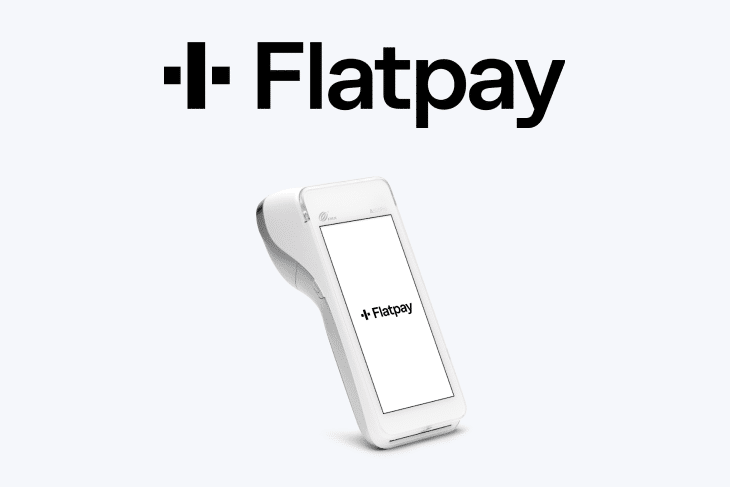
The terminal hardware is solid rather than remarkable. The Flatpay device is compact, battery life is adequate for a full service day, and the receipt printer integration works without configuration. Where Flatpay has invested more noticeably is in the merchant dashboard: real-time transaction data, daily and weekly summaries, and exportable reports that feed into accounting software are all genuinely clean and usable. Integrations with Xero, QuickBooks, and a handful of point-of-sale systems are available, though the integration library is narrower than established processors like Stripe or SumUp. That gap is narrowing — Flatpay has expanded its integration catalogue meaningfully over the past eighteen months — but it remains a consideration for businesses with specific POS requirements.
The limitations are geographic and product-scope. Flatpay operates in the UK, Denmark, Finland, Norway, Sweden, Germany, the Netherlands, and Belgium as of mid-2026. It does not yet serve the US, Australia, or most of Asia, which makes it a non-starter for businesses with international operations or those in unsupported markets. Online payment processing — e-commerce, payment links, subscription billing — is not part of the Flatpay product at the time of writing. It is a card-present, in-person payment solution. Businesses that need a unified online and in-person payment stack will still need a second provider alongside it, which complicates the simplicity argument somewhat.
Verdict: Flatpay is the right payment processor for in-person businesses processing more than roughly £8,000 per month in card payments, operating in a supported European market, and prepared to handle online payments separately. For hospitality businesses — cafés, restaurants, bars — and retail shops where card terminals are the primary payment infrastructure, the flat monthly fee eliminates a meaningful and unpredictable cost. The onboarding is genuinely simple, the hardware is reliable, and the pricing model means you never have to think about what a good month costs you in fees. Start your free Flatpay trial →
A great software.