


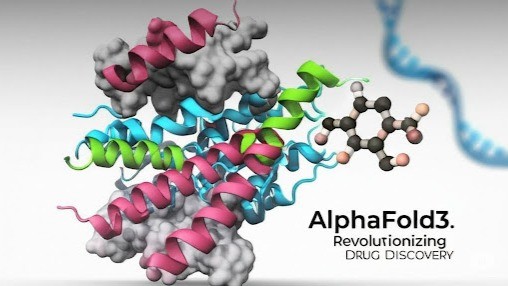
When AlphaFold 2 was released in 2021, it solved one of biology’s most vexing problems: predicting the three-dimensional structure of proteins from their amino acid sequences. The achievement was so significant that it effectively ended a 50-year competition called the Critical Assessment of protein Structure Prediction.
AlphaFold 3, announced by Google DeepMind in May 2024, extended the same approach to model not just proteins in isolation, but the interactions between proteins, DNA, RNA, and the small drug-like molecules that pharmaceutical companies use to treat disease. In other words, it can now model the full molecular machinery of life.
“The implications for drug discovery are almost impossible to overstate,” said Dr. Sarah Thompson, a structural biologist at the Wellcome Sanger Institute. “We’ve been trying to understand how molecules bind to proteins for decades. This changes the question from whether we can figure it out to how fast we can run the experiments.”
The practical impact is beginning to show. Isomorphic Labs, the DeepMind spinout focused on drug discovery, has used AlphaFold-based technology to identify drug candidates for several diseases, including a cancer target that had been considered “undruggable” because its protein structure was too flexible to target with conventional approaches.
The technology is also democratising drug discovery in ways that could shift the economics of the pharmaceutical industry. AlphaFold 3 is available to academic researchers through a web server, allowing university labs and small biotechs to access structural biology insights that previously required expensive equipment or months of computational time.
Leave a Reply