OpenAI’s new computer-use agent navigates GUIs, fills forms, and executes multi-step tasks across any application. It’s the most capable autonomous system ever made available to consumers.
The $65 billion CHIPS Act gamble is beginning to yield results. TSMC’s Phoenix facility reached full production capacity this month — a milestone that could reshape global supply chains.
The cloud giants have all doubled down on AI infrastructure. The right choice depends on your stack, your compliance requirements, and which AI models you’re building on.
Hornsea Three, a 2.8-gigawatt behemoth in the North Sea, began full operations this week. It’s a landmark moment for renewable energy — and a test case for the economic future of offshore wind.
Three tools with three very different philosophies. Whether you are an engineering team, a marketing department, or an enterprise programme office changes everything about this decision.
After a decade of promises, an AI-designed molecule has cleared the final regulatory hurdle. The approval marks a turning point for drug discovery — and raises new questions about how we evaluate medicines.
Each platform has a distinct strength. We tested all three with real Next.js, SvelteKit, and Node.js projects to find out which one earns the default deployment slot.
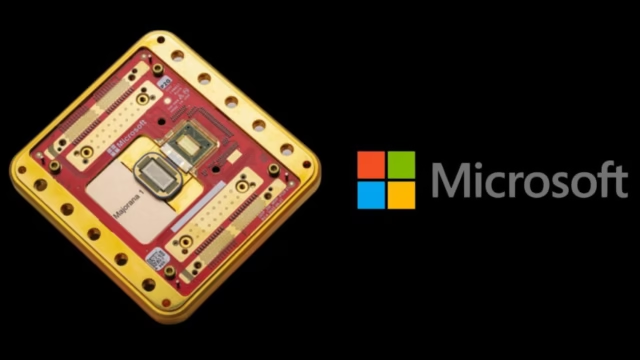
Microsoft says its new topological qubit chip can reach one million qubits on a single chip — a milestone that would make today’s quantum computers look like pocket calculators.
SpaceX’s satellite-to-smartphone service launched commercially, eliminating dead zones for the first time. The implications for emergency services, remote workers, and the telecoms industry are enormous.