



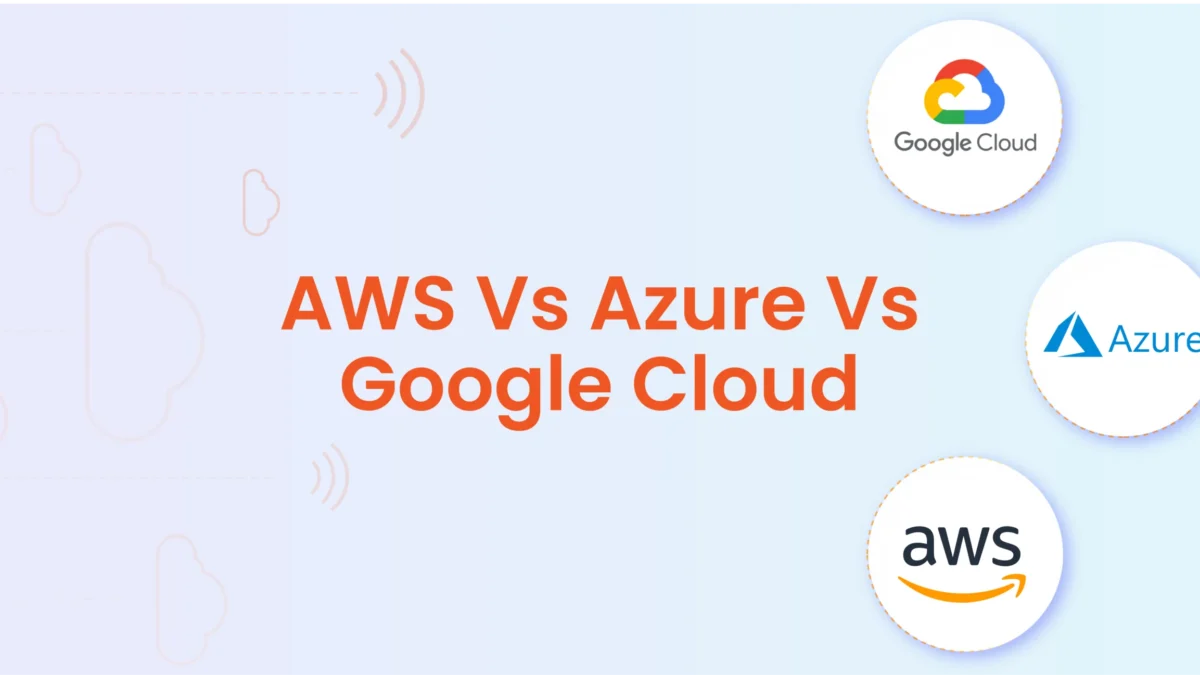
Choosing a cloud provider for AI workloads is one of the highest-stakes infrastructure decisions most organisations will make in the next few years, and the calculus is genuinely different than it was for general cloud workloads. AWS, Azure, and Google Cloud all offer capable AI infrastructure, but their strengths differ in ways that align with specific use cases rather than forming a simple hierarchy.
AWS has the broadest service catalogue and the largest ecosystem of third-party tools and integrations. For teams that need flexibility — to run custom training jobs, access specialised hardware, or integrate AI capabilities into complex existing infrastructure — AWS provides the most options. SageMaker is the most mature managed ML platform in the category, though its complexity is significant. The AI services layer (Rekognition, Comprehend, Textract) is deep and well-supported. The weakness for AI specifically is that AWS has been slower to productise access to the frontier models and has the least compelling managed AI assistant story.
Azure wins for organisations already in the Microsoft ecosystem — which, for enterprise organisations globally, means most of them. Azure OpenAI Service provides enterprise-grade, private access to GPT-4 and other OpenAI models with data residency guarantees and compliance certifications that the consumer OpenAI API does not offer. The Microsoft 365 Copilot integration runs on Azure. For enterprise AI deployments where compliance, data residency, and Microsoft integration matter, Azure is often the clear choice. The weakness is that outside the Microsoft and OpenAI ecosystem, it is less compelling.
Google Cloud has the strongest foundation AI capability of the three. Its TPU infrastructure is the most powerful hardware available for large-scale model training, Vertex AI is a capable MLOps platform, and native access to Gemini models — including the largest context window and best multimodal capability available in a cloud-native service — is a meaningful differentiator. For organisations building applications on top of Gemini, or training their own large models, Google Cloud has advantages that are not easily replicated on other platforms. The weakness is enterprise sales maturity and support quality, which lag behind AWS and Azure.
Verdict: For most enterprise organisations, existing Microsoft contracts and the Azure OpenAI Service make Azure the path of least resistance for deploying frontier AI models. For AI-native startups and research teams, Google Cloud’s hardware and Gemini access are compelling. For general-purpose cloud infrastructure with AI as one component among many, AWS remains the most flexible choice.
Leave a Reply