



The economics of running large AI models have followed a familiar pattern: costs fall as the underlying hardware improves. The introduction of Nvidia’s H100 reduced inference costs by roughly 10x compared to previous generations. The H200 reduced them further. But the limiting factor in AI inference has increasingly shifted from raw compute to memory bandwidth — how fast data can move between the chip’s memory and its processing cores.
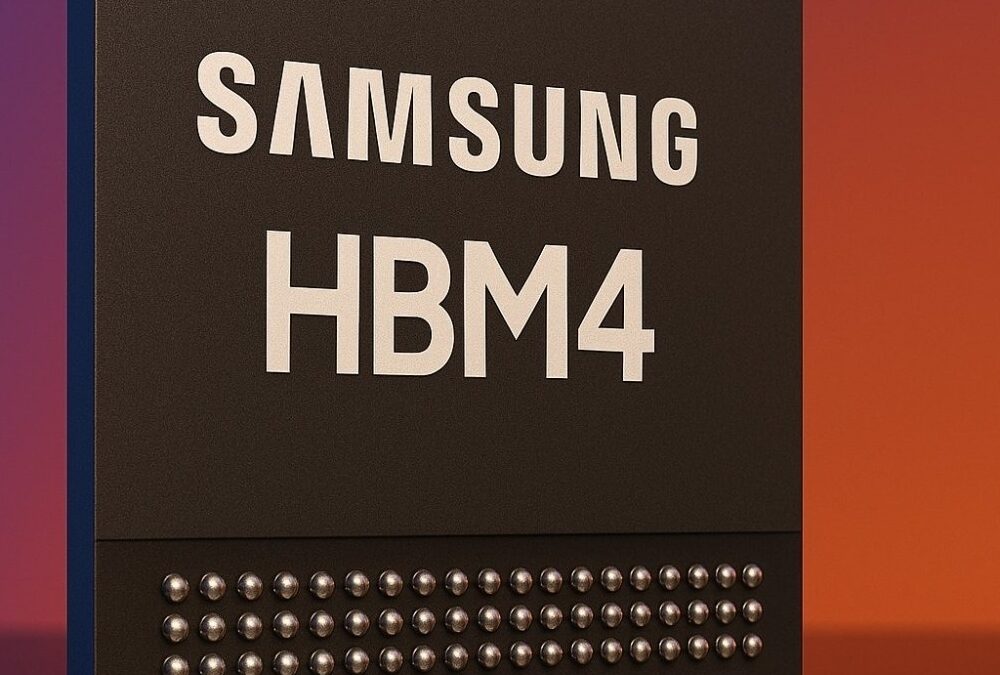
Samsung’s HBM4 memory chip, announced in April 2026, addresses this bottleneck directly. The new architecture increases memory bandwidth by approximately 80 percent compared to HBM3E, while simultaneously reducing power consumption by 30 percent. Early benchmarks from AI inference workloads suggest the improvement translates to roughly a 10x reduction in the cost per token for large language model inference.
Nvidia’s stock fell 8 percent on the announcement, then recovered most of those losses within two days. The market reaction reflected a genuine ambivalence: better memory is good for the AI industry as a whole, but it also potentially reduces the premium that attaches to Nvidia’s tightly integrated hardware-software stack if more commodity components can achieve competitive performance.
“Memory has always been the hidden bottleneck,” said Jim Keller, the chip architect who has led design teams at Apple, AMD, Intel, and Tesla. “We’ve been running the most expensive compute in history through what amounts to a garden hose. HBM4 is a bigger pipe. The question is whether the rest of the system can keep up.”
SK Hynix, Samsung’s main competitor in high-bandwidth memory, has its own next-generation product scheduled for late 2026. The memory market — which had been dominated by a race to produce faster versions of existing architecture — is now in a period of genuine architectural innovation, driven by the insatiable appetite of AI workloads for bandwidth.
Leave a Reply